Surface finishing and edge deburring after laser cutting
A laser cut leaves a clean edge, but a small burr or dross bead can remain on the underside. We explain when deburring is needed, which methods exist, and why edge quality determines coating adhesion and the lifespan of the surface finish.
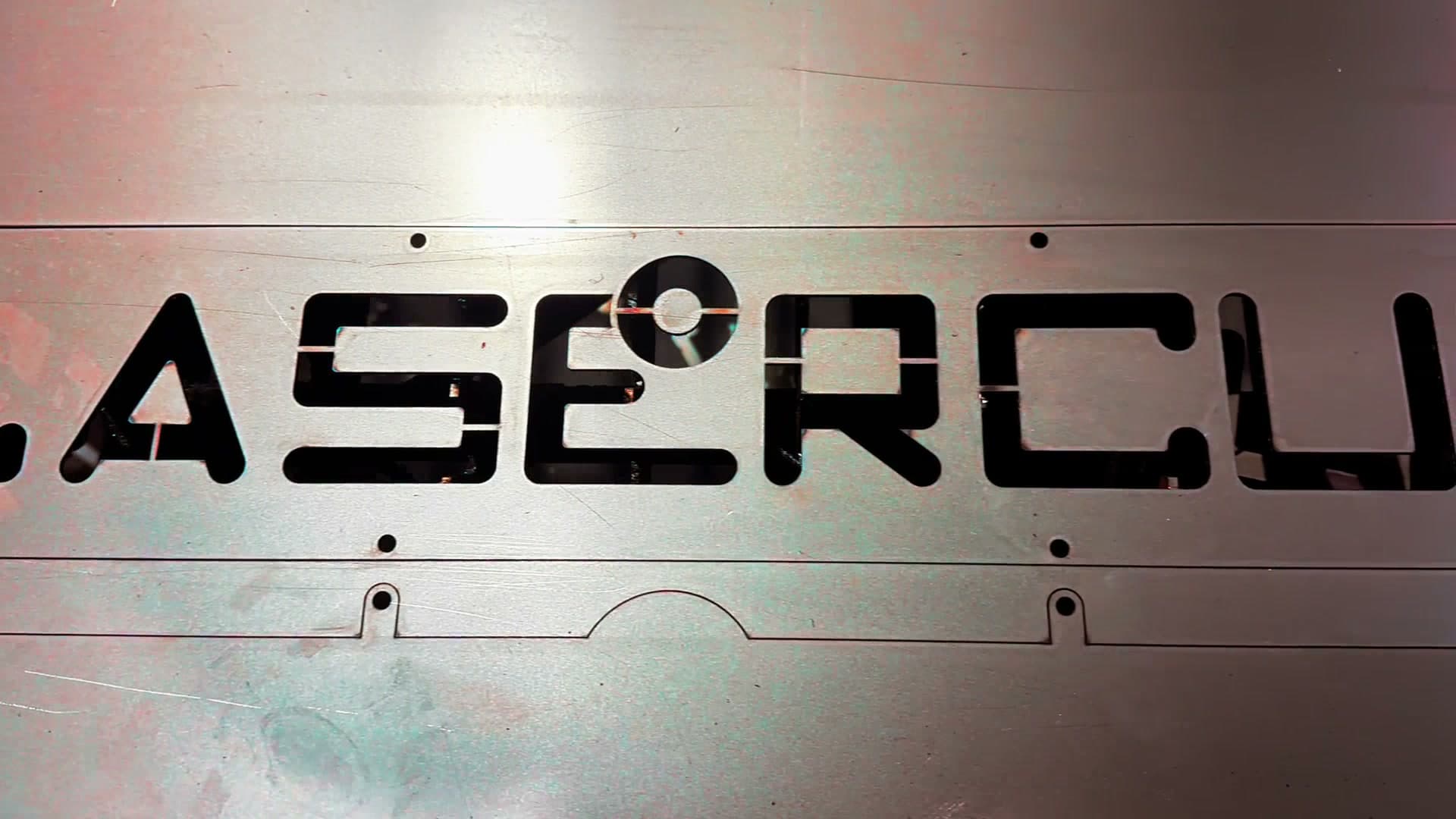
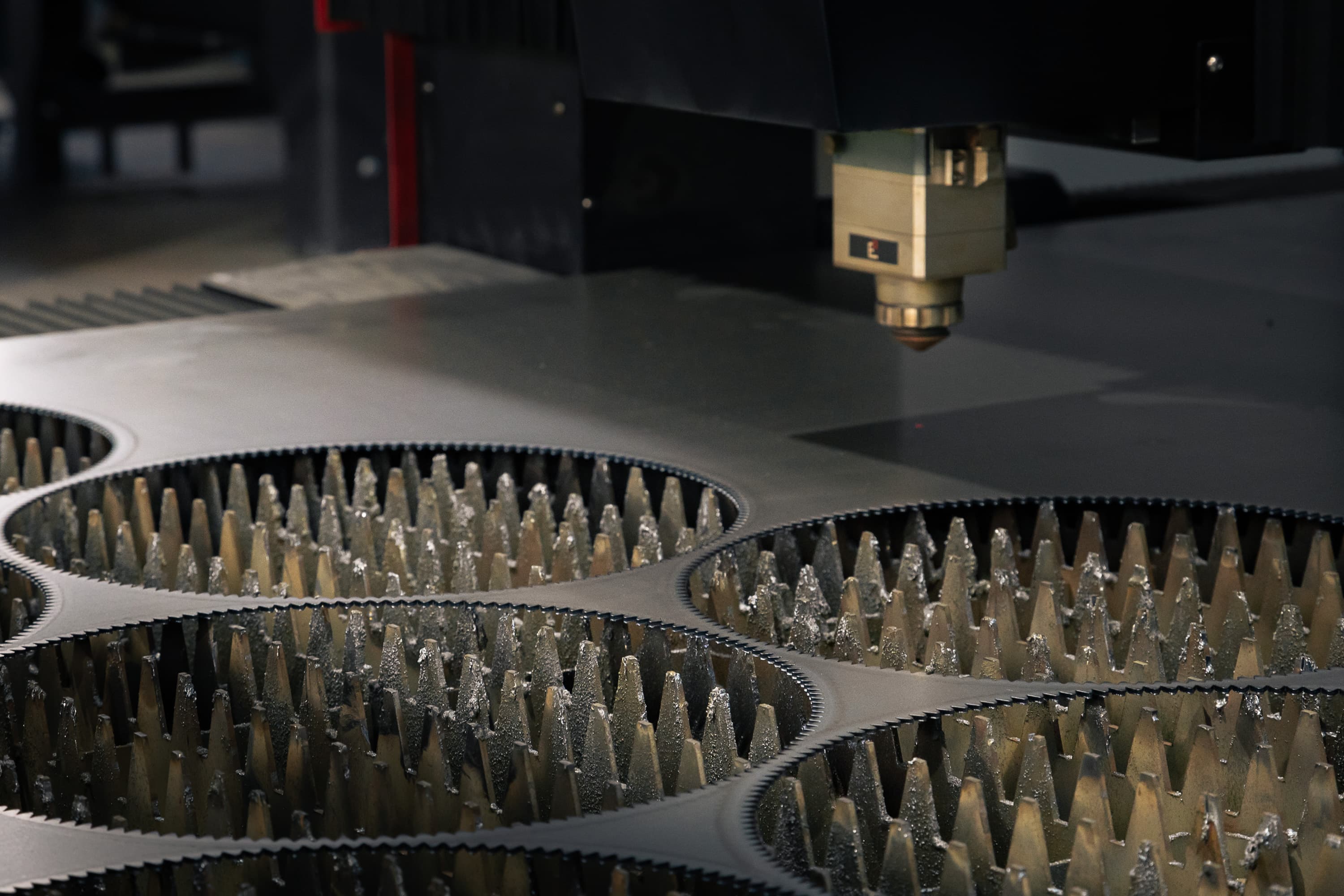
The laser beam cuts sheet metal with a clean, square edge, but the process leaves traces. The top surface shows fine vertical striations, while a small burr or a re-solidified bead of metal (dross) can remain on the bottom edge. The quality of this edge decides whether a part can go straight to assembly or needs a finishing operation first.
Edge quality after laser cutting
With correctly set parameters, the upper zone of the cut is smooth and precise. Towards the bottom edge the striations round off slightly, and with thicker sheets or faster cutting a burr or dross can form. A freshly cut edge is also very thin and can feel mildly sharp to the touch.
- Top zone — fine vertical striations, the most accurate part of the cut
- Bottom edge — a possible small burr or re-solidified bead
- Thin sheets are nearly burr-free; thicker ones show it more
When deburring is needed
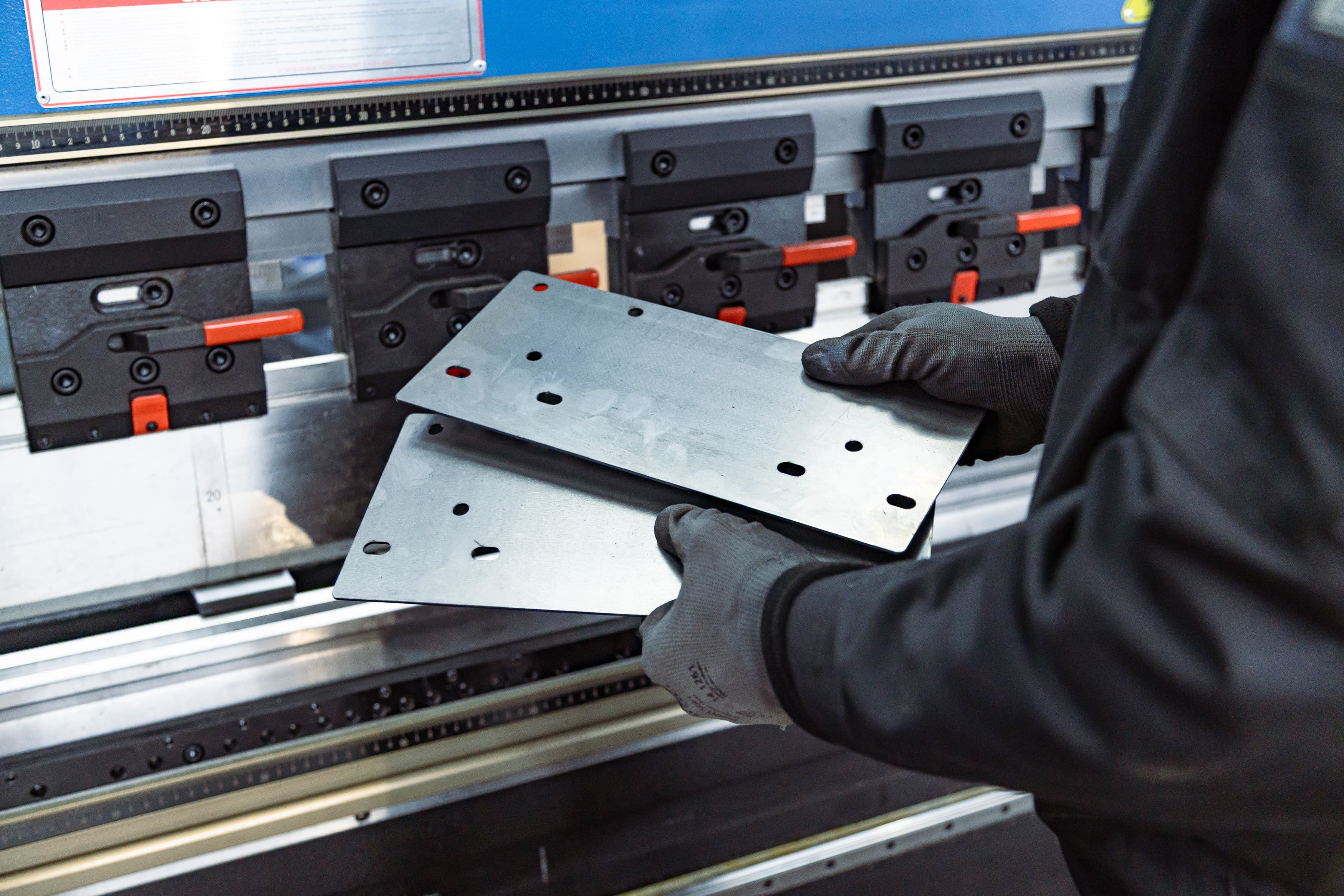
Not every part needs deburring. For simple structural sheets that are later welded or hidden, a raw edge is fine. Deburring pays off where the part is handled by hand, where it mates with another part, or where a surface treatment is to follow.
- Visible parts and covers where the edge is on show
- Parts handled by hand — for safety
- Precise fits, where a burr changes the real dimension
- Any part before painting, galvanizing or powder coating
Deburring methods
The choice between manual and machine deburring depends on batch size and the required quality. For small batches a file or an abrasive disc is enough; for larger volumes tumbling or a sanding belt is more efficient and also rounds the edge slightly.
- Manual deburring with a file or scraper — one-off production
- Barrel tumbling — bulk gentle edge rounding
- Sanding belt and brushing — even edge and a uniform surface grain
- Edge rounding (chamfering) — essential before powder coating
Surface treatments and why edges matter
Powder coating, galvanizing and wet painting all protect steel from corrosion and give it colour. A coating, however, pulls back and thins out on a sharp edge — and that is exactly where corrosion starts first. A rounded, deburred edge holds the coating evenly and markedly extends the lifespan of the finish.
- Powder coating — durable coloured finish, needs rounded edges
- Hot-dip galvanizing — corrosion protection for outdoor use
- Wet painting — thinner layer, sensitive to burrs and grease
Design tips for good edges
Many edge problems can be solved at the design stage. Avoid unnecessarily sharp internal corners, allow room for rounding, and if the part is going to be surface treated, state it in the order in advance — that way the right deburring process is chosen before coating.
- Round internal corners with a small radius instead of sharp notches
- State which side is the visible face — it is deburred first
- Declare the planned surface treatment up front
- For precise fits, account for material removed during rounding