Cutting gases in laser cutting — oxygen vs. nitrogen
The choice of assist gas decides edge quality, cutting speed, and cost. We explain when cheap and fast oxygen pays off and when clean but pricier nitrogen is worth it — and which gas suits which material.
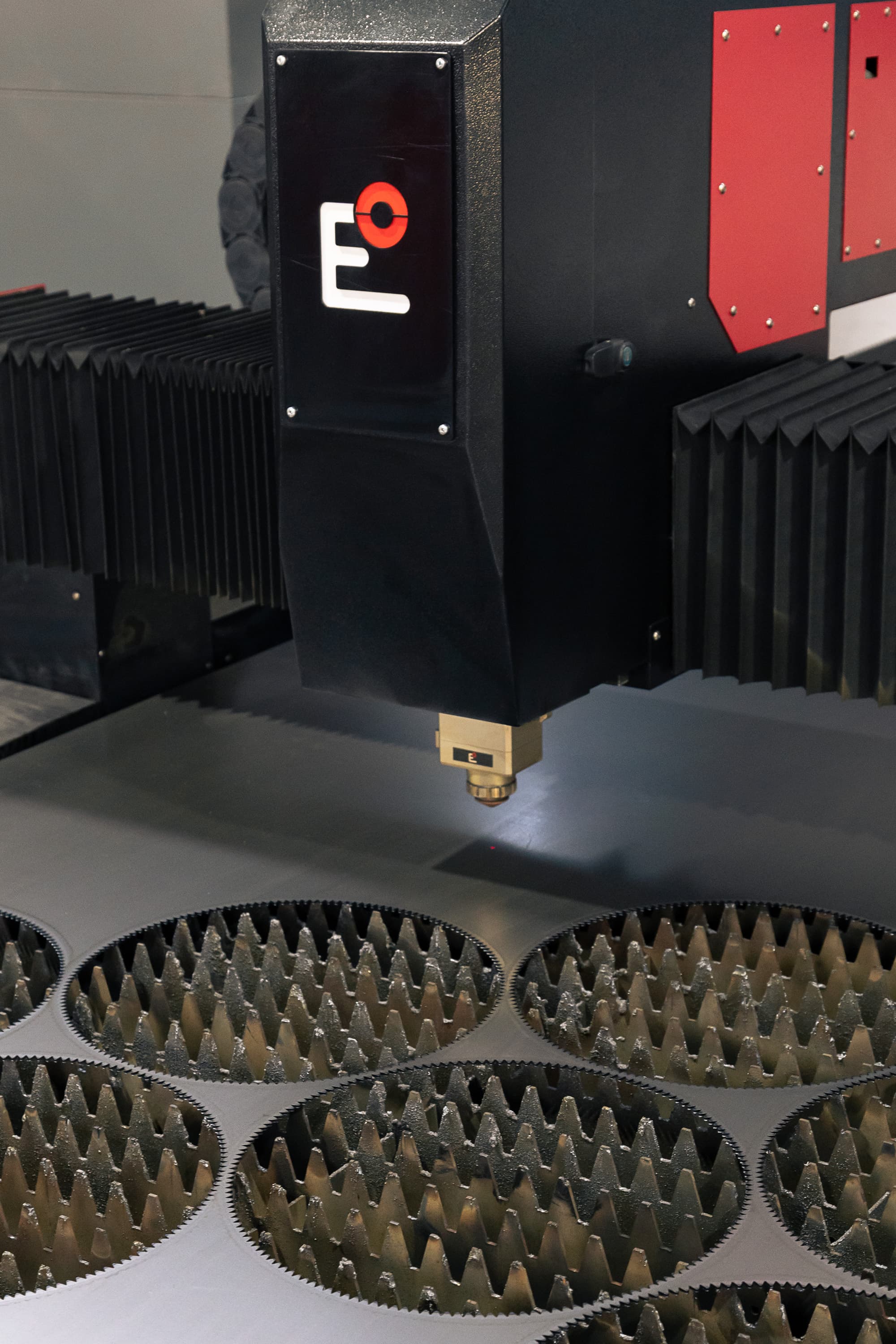
In laser cutting it is not only the beam that does the work. Along with it, an assist (cutting) gas flows through the nozzle, blowing molten material out of the cut and cooling the edge. That gas decides how the edge looks, how fast the part is cut, and how much the cut costs. The two most common choices are oxygen (O₂) and nitrogen (N₂).
How the assist gas works
The laser beam melts the material, but heat alone would only melt the metal in place. The pressurised assist gas blows through the melt zone, pushes the molten metal down through the kerf, and keeps the edge clean. Whether the gas reacts chemically with the material or not changes the whole character of the cut.
Oxygen (O₂) — fast and cheap on thick steel
Oxygen reacts chemically with carbon steel — it burns it. This exothermic reaction adds its own heat to the cut, so the laser cuts markedly faster and handles greater thicknesses. The gas is cheap. The downside is a thin oxide layer (scale) left on the edge — a darker, slightly rough trace from the burning.
- High cutting speed, especially on thicker sheet
- Low gas cost — the economical choice for structural steel
- Oxide layer on the edge — must be removed before coating
- Suited to carbon (mild) steel and greater thicknesses
Nitrogen (N₂) — a clean, oxide-free edge
Nitrogen is inert — it does not react with the material, it only blows the melt out mechanically. The edge therefore stays bright, metallically clean, and free of oxide, ready for further treatment straight away. The price is a lower cutting speed (no exothermic heat) and much higher gas consumption and cost, because nitrogen has to flow at higher pressure.
- Clean, bright, oxide-free edge — ideal before coating
- A must for stainless and aluminium, where oxygen darkens the edge
- Lower cutting speed and higher gas consumption
- Higher cut price in exchange for edge quality
Which gas for which material
The gas choice is largely driven by the material. Carbon steel takes either, while stainless and aluminium almost always call for nitrogen.
- Carbon steel — O₂ for speed and cost, N₂ if a clean edge is needed
- Stainless steel — N₂, so the edge does not darken or corrode
- Aluminium — N₂ (or compressed air) for a clean, bright cut
What it means for price, speed, and your order
Oxygen is usually cheaper and faster, at the cost of an oxide edge; nitrogen is pricier and slower but gives a clean edge ready for paint. If the part goes straight to powder coating, painting, or stays visible, nitrogen pays off — you save on later edge cleaning. For a simple structural part that gets welded or hidden anyway, oxygen is more economical. You don't have to specify the gas in your order — we pick it by material and the required edge quality, or just tell us if the edge needs to stay clean for coating.